[01]
Start with the request.
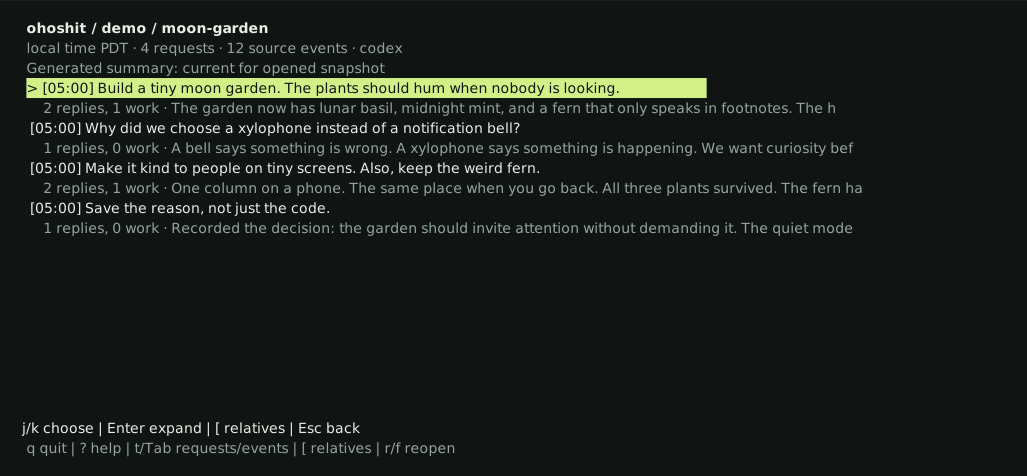
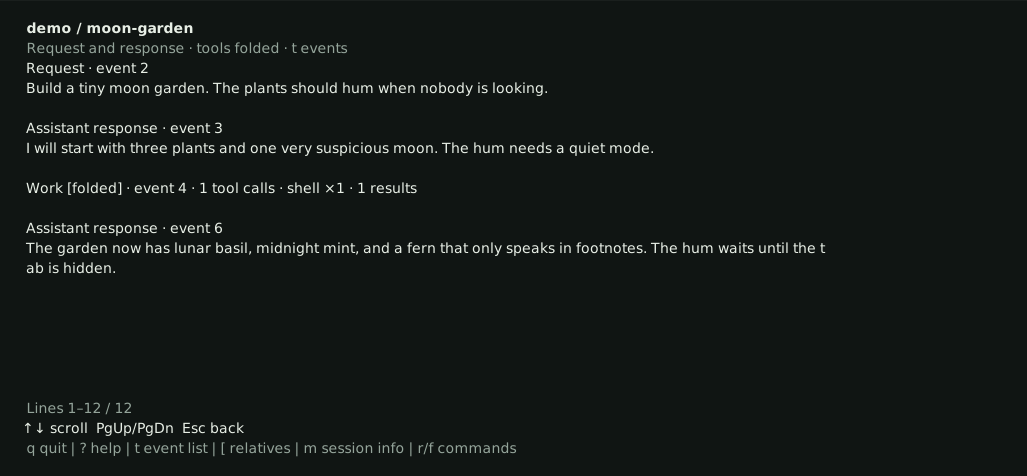
Conversations open as request chapters. See what was asked and the response outline, then step into the part you need.
/ oh o shit / an extremely useful exclamation.
You definitely
talked about this.
Find the conversation. Follow the evidence. Pick up the thread.
Open the trapdoorAgent history, across harnesses and machines.
Comfortably at home in your terminal.
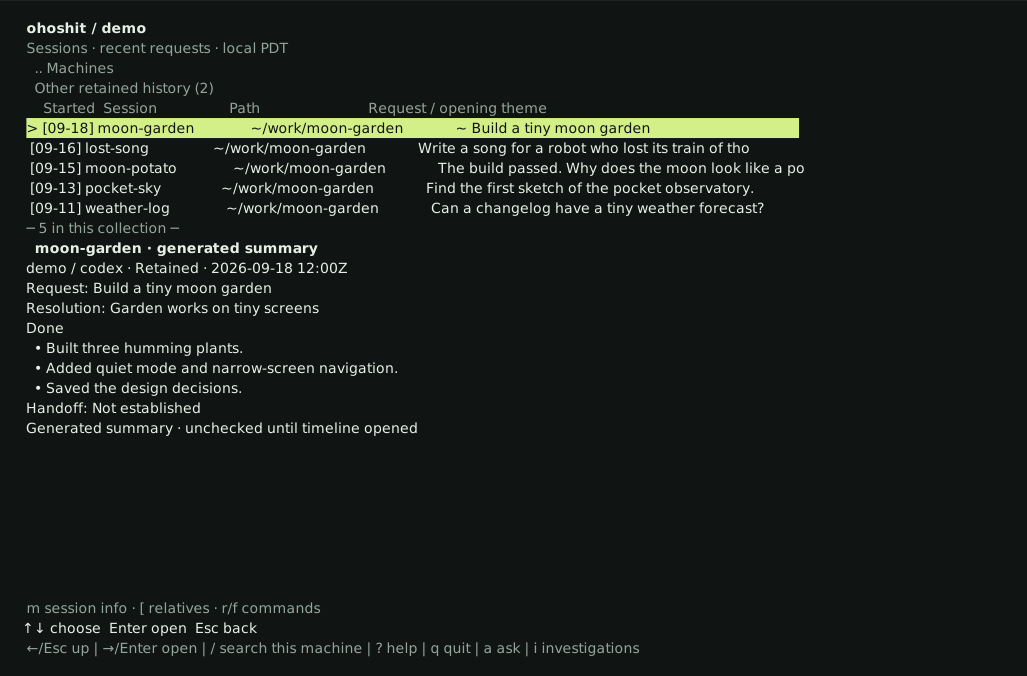
Somewhere between the first question and the seventeenth tool call, you figured something out. There should be a way back.
Conversations open as request chapters. See what was asked and the response outline, then step into the part you need.
Open replies, unfold tool activity, inspect checkpoints, and follow parent and subagent links. The evidence keeps its source.
Search conversation prose, or narrow the hunt to request messages. Filter by host, workspace, harness, date, and status.
Follow verified parent, child, and prior-window relationships. Uncertain history stays visibly uncertain.
Get native resume or fork commands for supported sessions, with the right identity, host, and workspace.
Configure a model runner, then investigate a question across your history. Come back to saved findings, source citations, and the search conversation itself.
Model investigations are opt-in. Findings open the original conversation so you can check the evidence yourself.
“Why did we abandon that approach, and what finally worked?”
The kind of question a filename has never answered particularly well.
01Original logs stay on their source machines. Browsing reads retained history without rewriting it.
02Identity comes before convenience. Exact session IDs and verified native keys keep old windows distinct from current conversations.
03Memory should be portable. Saved investigations keep their question, progress, findings, and links to the source conversation.
The terminal browser works locally today, with configurable SSH hosts when your archive spans more machines. A free, open-source release is planned.
The source is private today. Public installation instructions and downloads will arrive with the release.
Explore the real screenshotsPublic packaging, broader adapters, and a batch summary interface. The xylophone has made itself comfortable.
From the source checkout, open the local browser, search request messages, or browse your configured SSH hosts:
bin/ohoshit
bin/ohoshit --query "why SQLite?" --search-in human
bin/ohoshit --hosts all
Investigations require an explicitly configured model runner. The bundled Codex runner uses your ChatGPT subscription; the custom-runner protocol supports other harnesses. There is no public checkout or install link yet.
It offers native continuation where the source identity and harness support it. Retained historical OpenClaw windows remain browsable; they don’t get a command that silently opens a newer conversation.
Yes. Once you configure and explicitly start an investigation, its model runner can read relevant history to answer the question. The bundled Codex runner uses your configured ChatGPT sign-in; other harnesses can connect through the custom-runner protocol. Ordinary browsing is read-only, and original transcripts remain on their source hosts.
The browser works locally by default. Add configured SSH hosts when your archive spans more machines. No five-computer minimum. A single sufficiently chaotic laptop is a fine beginning.